
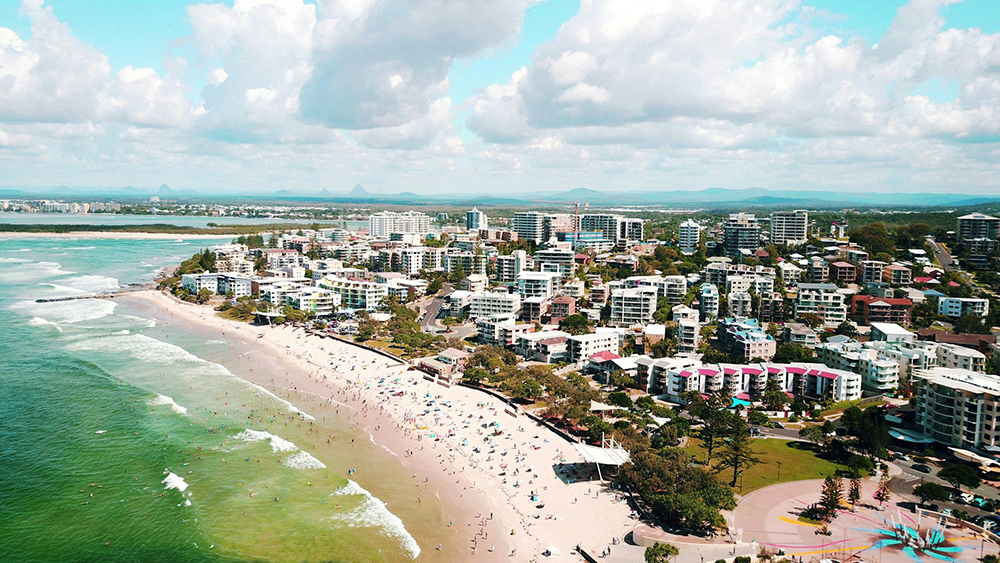
Why the Sunshine Coast Property Market Is Maturing With Intent
The Sunshine Coast property market is often discussed as a lifestyle destination, but that framing undersells what is actually happening on the ground. Long-term demand is no longer being driven by sentiment alone. Structural change is reshaping how people work, move, and invest — and it’s beginning to show up in pricing, rental pressure, and buyer behaviour.
Rather than speculative spikes, the Sunshine Coast is evolving through deliberate infrastructure, employment, and connectivity decisions that support sustained demand over time.
Here are four structural forces that explain why the Sunshine Coast property market is now being watched far more closely by long-term investors.
A CBD Reshaping Employment on the Sunshine Coast
One of the most important shifts in the Sunshine Coast property market is the emergence of a genuine central business district.
The Sunshine Coast Health Precinct and surrounding commercial development are changing the employment equation. Higher-value jobs in health, technology, education, and professional services reduce the region’s reliance on tourism and construction cycles. That matters because employment diversity directly supports housing demand stability.
When people can build long-term careers locally, they stop treating housing as temporary. That transition underpins owner-occupier confidence, longer tenancy periods, and stronger rental resilience.
Olympic Infrastructure With Long-Term Property Impact
Major infrastructure linked to the Brisbane 2032 Olympics is often misunderstood. The real value isn’t the event itself — it’s the legacy.
Transport upgrades, public realm investment, and regional planning acceleration all feed into the Sunshine Coast property market well beyond 2032. These projects improve accessibility, shorten commute times, and increase the functional size of the region for workers and businesses alike.
Importantly, this is not speculative infrastructure. Much of it is already funded, approved, or under construction, which reduces execution risk compared to headline-driven announcements.
Connectivity That Changes How People Live and Work
Connectivity is no longer just about roads. It’s about how quickly people can move between home, work, education, and lifestyle.
Improved public transport corridors and road upgrades are changing daily behaviour patterns across the Sunshine Coast. As connectivity improves, suburbs once considered fringe begin to function as core residential areas. That transition often precedes price growth, not follows it.
For investors, this means the Sunshine Coast property market is no longer a single-node location but a network of increasingly viable residential zones.
Demand Momentum Ahead of Housing Supply
Perhaps the most critical factor shaping the Sunshine Coast property market is timing.
Population growth, migration patterns, and lifestyle relocation demand are running ahead of new housing supply. Planning constraints, geography, and development timelines limit how quickly stock can respond. When demand consistently outpaces supply, pressure builds — first in rents, then in prices.
This isn’t a short-term imbalance. It’s a structural feature of coastal markets where land availability is finite and demand remains persistent.
A Market Maturing, Not Speculating
What makes the Sunshine Coast property market compelling right now is not hype — it’s alignment.
Employment growth, infrastructure delivery, behavioural change, and supply constraints are moving in the same direction. That’s typically what separates volatile growth from durable performance.
For investors focused on long-term outcomes rather than short-term noise, this is the kind of market evolution worth paying attention to.
If you’re assessing how the Sunshine Coast fits into a broader portfolio, understanding why demand is forming matters far more than chasing where prices have already moved.